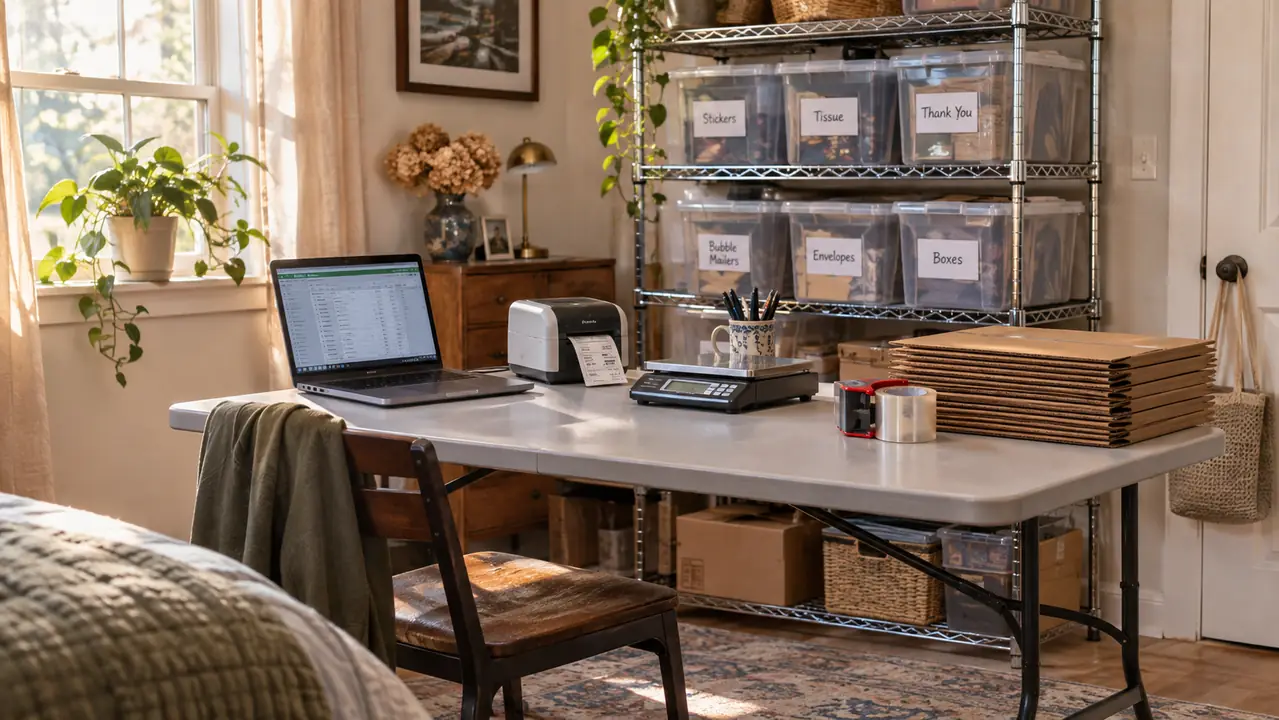
I hand-wrote shipping labels for the first year I sold on eBay. Not out of principle. I simply did not know that a label printer was a thing a person could buy and set on a folding table. So I sat in the spare bedroom with a stack of 4x6 sheets, a black pen, and a right thumb that was getting angrier by the week, copying addresses off my laptop screen one line at a time and hoping the tape would hold.
I bought the Rollo USB thermal printer in April 2022, four and a half years ago, after a winter of taping sheet paper onto boxes and watching the corners lift in the cold. It has printed thousands of labels since, and it is still the only label printer in this house. What follows is not a spec sheet. It is the list of things that actually changed at my table, roughly in the order I noticed them.
One label per second, no ink, no pen
The Rollo USB printer sits at the left end of my folding table and runs off a single cable to my laptop. It has printed thousands of 4x6 labels since April 2022 and has never needed a cartridge.
Amazon See the Rollo USB printer on Amazon →One label per second, from click to peel
The Rollo prints at 150mm/s, which the listing describes as one 4x6 label per second. I do not sit there counting seconds. I do know that on a Sunday night with twelve packages lined up, the printing is no longer the slow part of the job. Folding the sweaters is the slow part. What used to be forty minutes of writing, checking, and rewriting now takes about the same time as peeling and sticking, and that makes for a different kind of evening.
The address gets copied, not retyped by hand
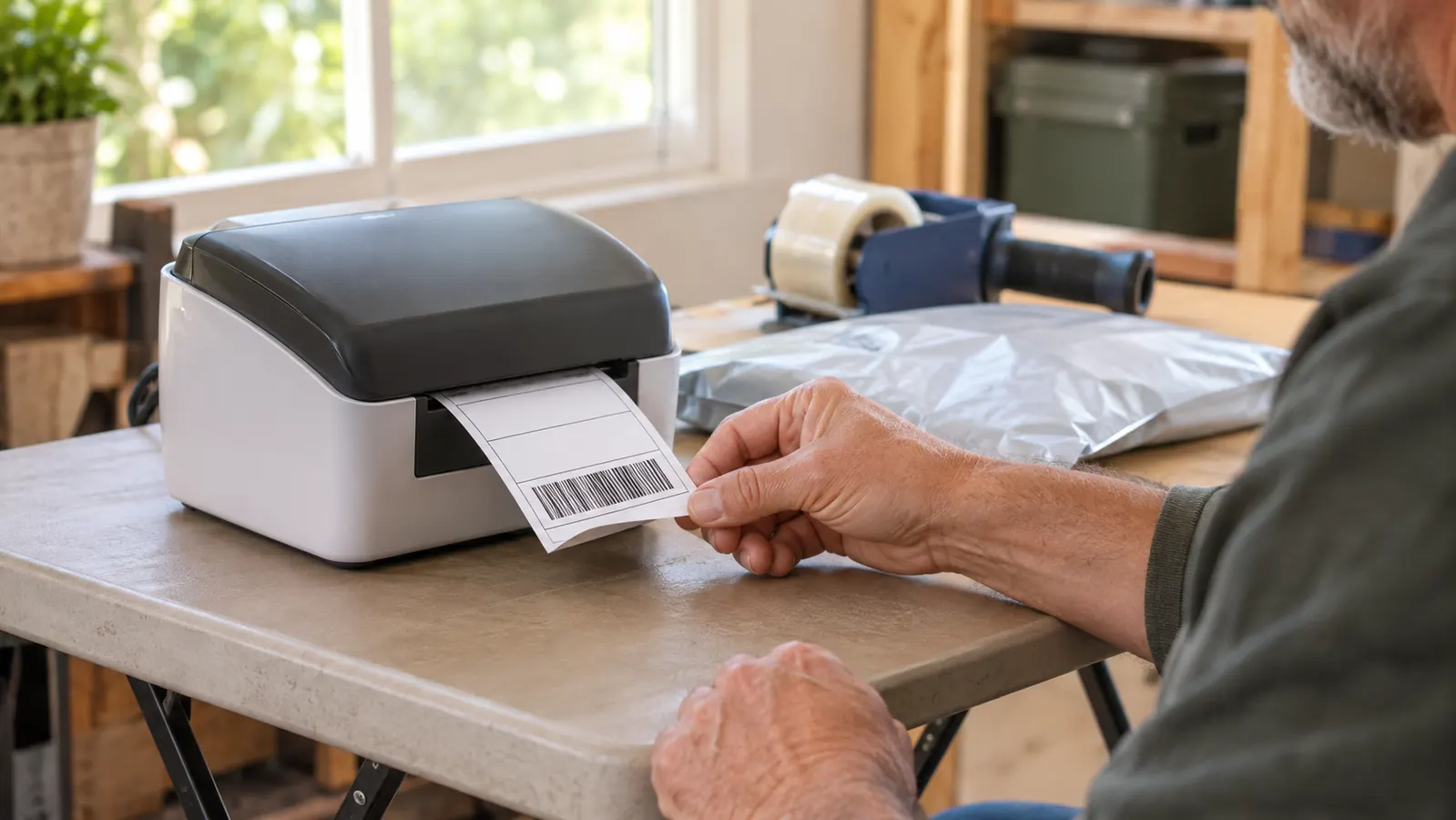
Writing a label means reading an address on a screen and reproducing it with a pen, which means you can get it wrong. I once sent a pair of boots to the right street number in the wrong town, and the buyer was kind about it, which somehow made it worse. With the printer, I copy the address from the order and it comes out exactly as the buyer typed it. If the buyer typed it wrong, that is a separate problem. At least it is not mine stacked on top of theirs.
Nobody at the counter has to squint at it
I spent twenty-seven years behind a post office counter, so I know what happens to a label the carrier cannot read. The package slows down, somebody keys the address in by hand, and it lands in the bin a few minutes later than it should. My handwriting was never bad, but it was never printed either. In the first month with the Rollo, two different clerks commented that the labels looked sharp. That is the whole review, really.
The barcode scans on the first pass
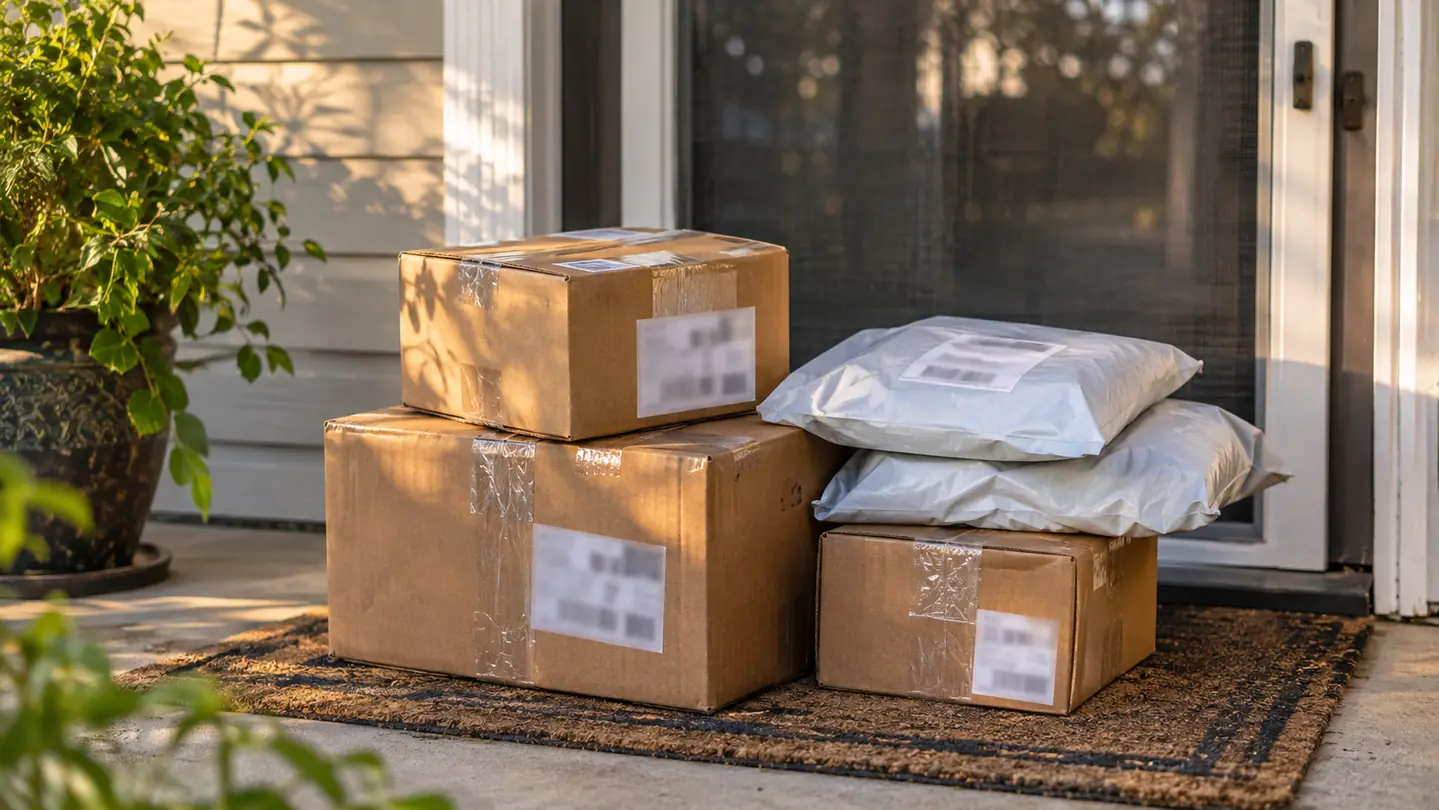
A handwritten label has no barcode on it, so every handoff turns into a manual entry. A thermal label comes out with a crisp barcode printed edge to edge, with no ink to spread and no toner to fade halfway down the page. At the counter it beeps once and moves on. When I schedule a carrier pickup from the porch, the same thing happens on my front steps. Nothing has to be interpreted by anybody.
No ink, no toner, no cartridge at nine at night
The Rollo is a direct thermal printer, which is a plain way of saying it uses heat to darken the label instead of spraying ink onto it. In four and a half years I have not bought a cartridge, a toner drum, or a ribbon. There is no ink to run out on the evening you promised yourself you would finally clear the shelf. The only thing I restock is the labels themselves, and those I buy on a roll like everybody else.
Your thumb stops paying for the habit
I have arthritis in my right thumb. It is mild, and I would like to keep it that way. Pressing a pen through a label, then pressing harder to make the zip code legible, was the worst thing I did to that thumb all week. Pressing a key on a laptop is not. I notice it most in December, when the boxes go from ten a week to considerably more, and the writing used to wear me out long before the taping ever did.
Thirty labels queued while you fold the sweaters
The Rollo will hold up to 30 labels in a single run. I rarely have thirty in one night, but in November I get close. I sit down, print everything I sold that day in one go, and then work through the stack at the table while the printer sits quiet. It sounds like a small thing. It is also the difference between stopping every four minutes and not stopping at all until the cart is full.
It fits in eight inches of folding table
The printer is 8 inches wide, 4 inches deep, and 4 inches tall, and it weighs 2.2 pounds. Mine lives at the left end of a 6 foot folding table, next to the scale, and it has never been in the way of a box. It feeds the next label without me lining anything up by hand, and the small LED display tells me what it is doing. I have never once had to move it to make room for an order.
The label comes out dry and ready to stick
There is no ink to smudge. A thermal label is finished the second it comes out of the printer, so I can peel it and press it onto a poly mailer without waiting or worrying that my palm will drag through the address. If you have ever carried a stack of hand-written labels across a room and arrived with a blurred zip code, you already know why this is on the list as a reason and not a footnote.
Four and a half years later, it is still the only one I own
I bought this printer in April 2022 and I have not replaced it, upgraded it, or wanted to. It carries a limited one year warranty, which ran out a long time ago, and it is still printing every label that leaves this house. There are no cartridges to swap and no reason for me to go looking at another model. When a piece of equipment survives four and a half years of a side business run out of a spare bedroom, that is the review.
Twenty-seven years behind a counter taught me this: a label the carrier has to stop and read is a label that costs you a day.
What I'd Skip
If I were starting over, I would skip the sheet labels and the tape right along with them. I would skip the clear plastic label sleeves, which yellow and collect dust in a drawer. I would skip writing directly on the box with a marker, which works fine until it sits on a porch in the rain. And I would skip anything that needs a phone app to print a label, because my laptop is already open with the order on the screen in front of me. A USB cable, a roll of 4x6 labels, and one small printer at the end of the table is the entire setup. Four and a half years in, I have not needed any part of it to be cleverer than that.
Thousands of labels later, I still have not bought ink
The Rollo USB printer, a roll of 4x6 labels, and a cable to the laptop. That is what replaced the pen, the tape, and the squinting at the counter.
Amazon Check the Rollo printer on Amazon →