The label was crooked, the zip code was smudged, and the clerk held it up to the light and squinted at it. I knew that squint. I had done that squint for twenty-seven years behind the counter of a small-town post office outside Dayton, and I knew exactly what it meant: this package is about to take an extra minute, and the person who mailed it is going to feel bad about it.
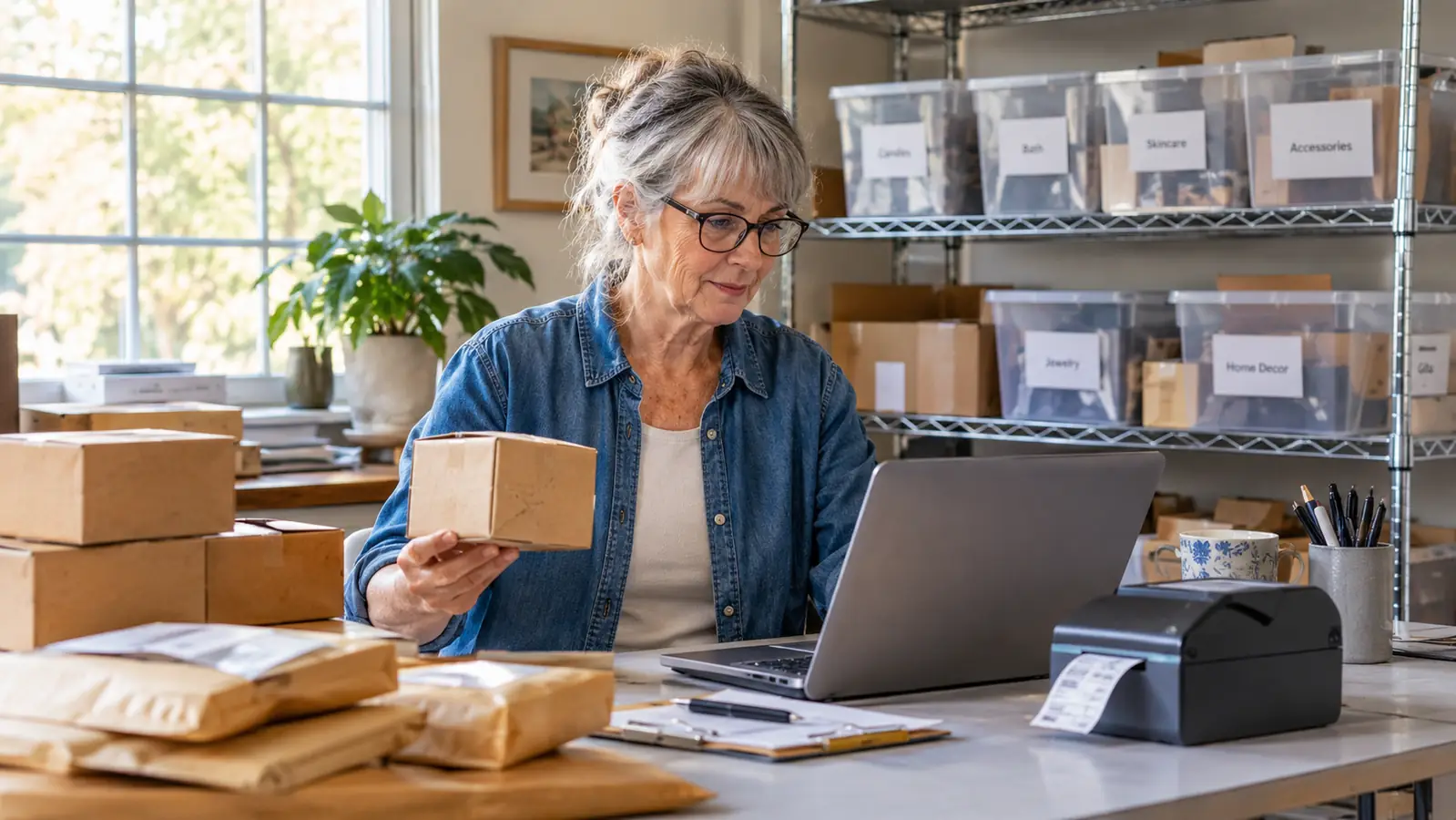
That person was me. It was February 2022, and I had been reselling thrifted clothing, shoes and vintage kitchenware for about a year by then. Eight to fifteen packages a week were leaving the spare bedroom I call the shipping room, and every one of them went out with my handwriting on the front. The Rollo thermal printer that now sits at the left end of my folding table was still two months away.
I want to be honest about the handwriting years, because I think people imagine they were fine. They were not fine. A permanent marker on a label is fine for the first six packages. By the tenth, your hand is cramping and the addresses start to run uphill. My right thumb has a little arthritis in it, so by Sunday night I was writing addresses slowly, the way a kid practices cursive, and they still came out looking like they had been assembled from memory.
For a while I tried printing addresses on regular paper and taping them down. Two strips of packing tape across the top, one across the bottom, smoothed flat so the scanner at the counter could read it. That works right up until the tape is old or the porch is damp, and then you have a package wearing a paper sail.
In April 2022, about a year into reselling, I bought a Rollo USB thermal label printer. I had been circling it for weeks. What finally decided it was small and slightly embarrassing: I spent a Sunday printing addresses on sheet paper, cutting them out with scissors and taping them down, and I ran out of tape at package eleven.
It arrived in a box about the size of a hardback book. 2.2 pounds, 4 inches deep and 8 inches wide, which matters when your whole operation is a six-foot folding table with a scale on one end and a tape gun hanging on a hook. I set it on the left end of the table, ran the USB cable to my laptop, and installed the driver. It found it, and that was that. Rollo says it works with both Windows and Mac, and I have no reason to doubt them, but I have never owned a Mac and I am not going to pretend otherwise.
Four and a half years, thousands of labels, and I have never once stopped packing to go buy ink.
One USB cable, one button, and a label comes out
I set mine up in April 2022 and have not hand-written a label since. If you are still cutting paper and taping it down on Sunday nights, this is the first swap I would make.
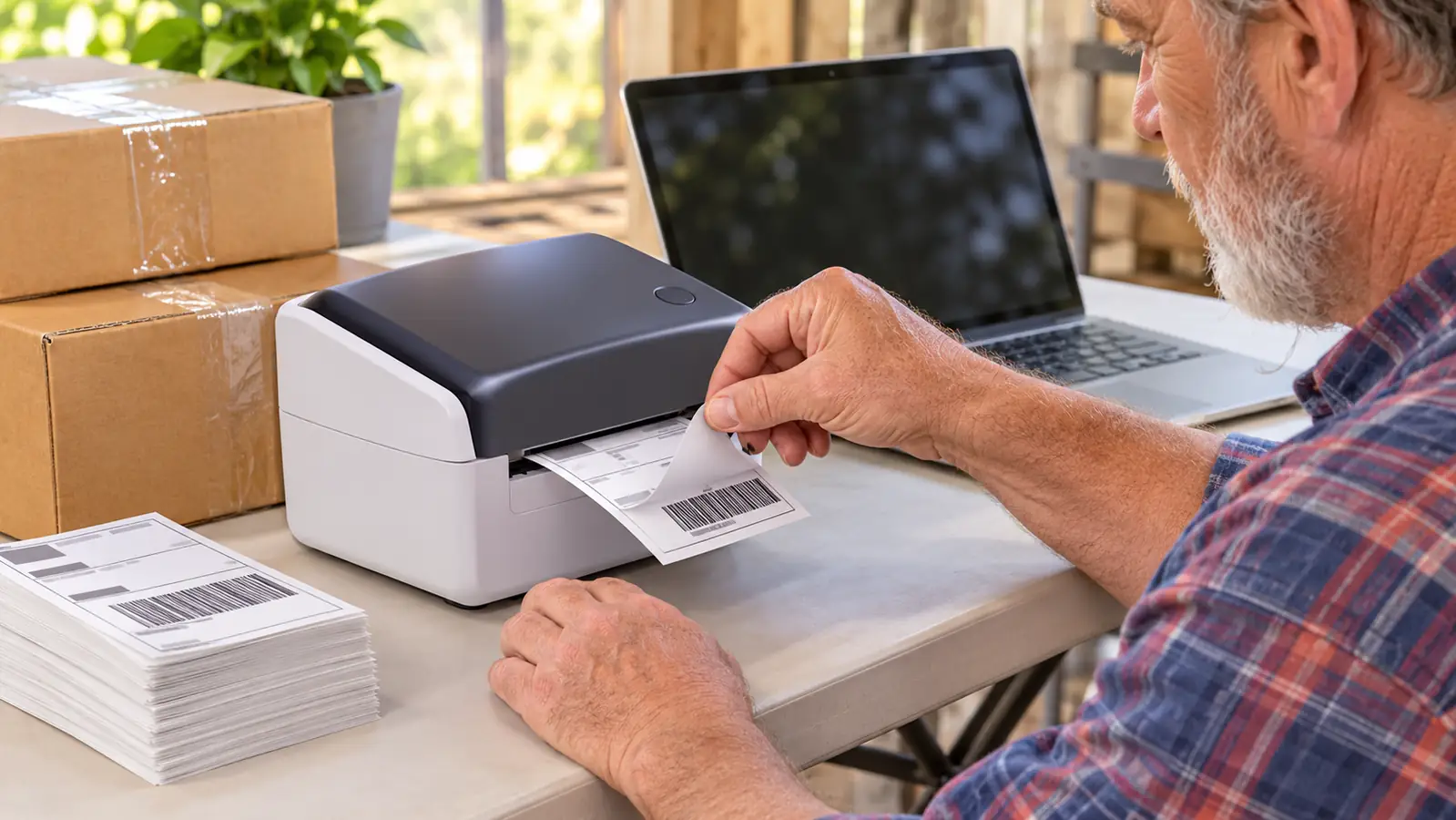
Amazon Check Today's Price on Amazon →Here is the part that is hard to describe without sounding like an advertisement: you press print and a label comes out. Direct thermal means no ink and no toner, so there is no cartridge to remember at the worst possible moment. Rollo lists the print speed at 150mm per second, which they describe as one 4x6 label per second. In practice, the time between me clicking print and peeling the label is shorter than the time it takes me to find the right box.
It also has automatic label detection. That sounds like a line off a spec sheet and is honestly the thing I would miss most if it went away. You drop the roll in, close it up, and the printer finds the gap between labels on its own. I have loaded a great many rolls in four and a half years and I have never once lined one up by eye.
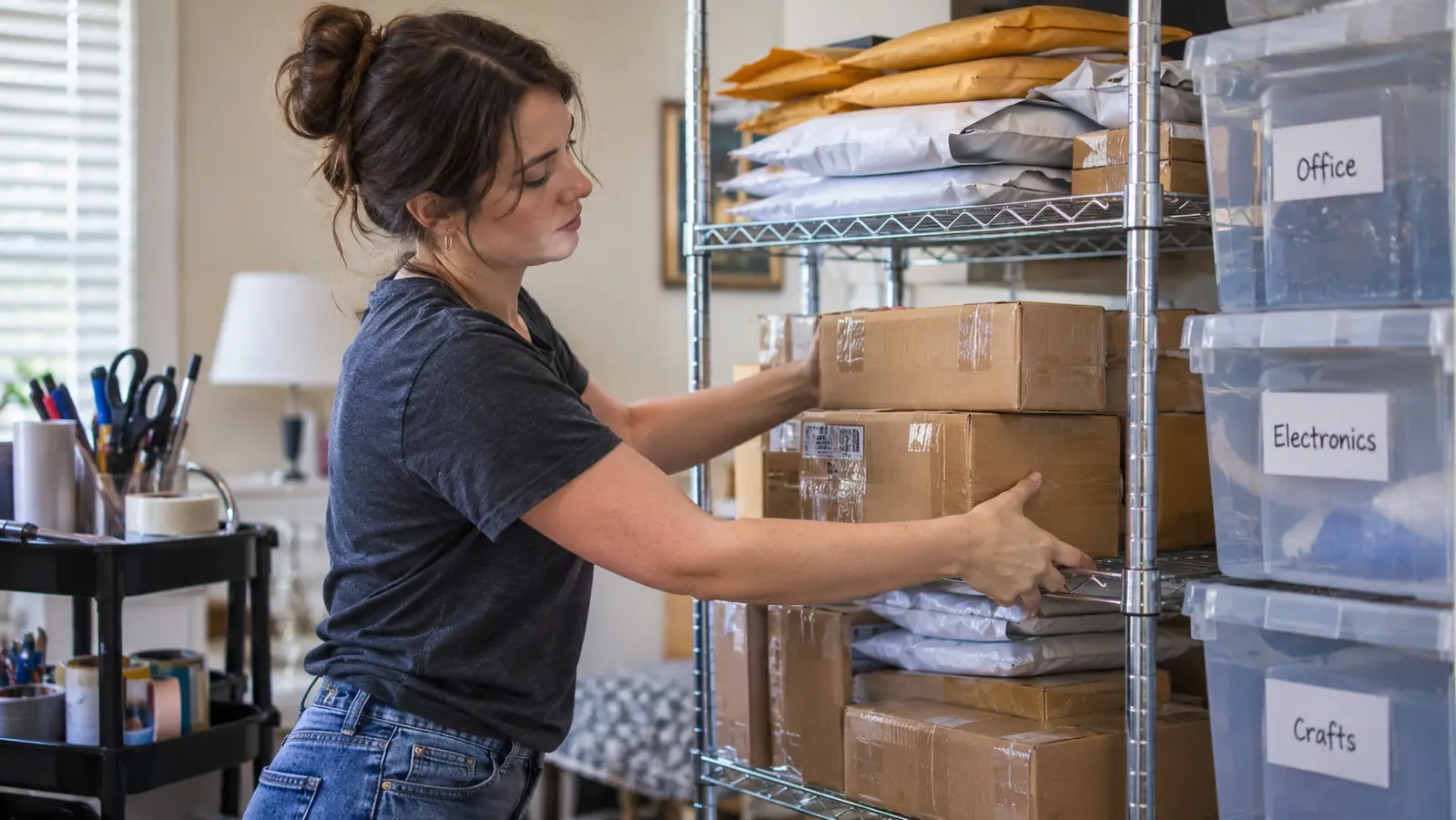
Most days I print one label at a time as I pack, because I once printed twelve in a row, shuffled the boxes, and got two of them wrong. When I am batching a weekend of orders it will run through a stack for me, up to 30 in a single run, which covers my busiest Monday.
Four and a half years later it is still the only label printer in this house. It has lived on the folding table, moved to the rolling cart, and moved back. It has printed thousands of labels. It has never needed a cartridge, because there is nothing to refill.
What it is not: it is not wireless. Mine runs on a USB cable to a laptop, and that is the only way I have ever used it. There is no Bluetooth pairing and no phone app anywhere in my workflow. Some people will find that inconvenient. I have come to think of it as one less thing that can drop its connection at four in the afternoon on a Tuesday. It prints black on white 4x6 thermal labels and that is the whole of it, so if you need color, this is the wrong machine. It carries a limited one-year warranty. Mine is well past that and still going.
What I'd Tell You If We Were Sitting at My Kitchen Table
I would tell you to buy the printer before the pretty things. Almost everyone starting out buys the mailers and the tissue paper first, because those are fun, and then hand-writes labels for a year because a printer feels like a big step. The mailers are easy to replace. Your evenings are not.
I would tell you to buy a box of 4x6 labels when you buy the printer, not a single roll. And to keep the USB cable where you cannot hook it with your foot, because the printer is light enough that a careless step will send it off the table.
And I would tell you the honest thing, which is that a label printer does not make you a better reseller. It does not write your listings, take your photos, or help you price a mid-century bowl. It takes the last ten minutes of packing, the part I used to dread, and makes it quiet. That is all it does. It has been worth it every week for four and a half years.
The ten minutes I got back on Sunday nights
Mine has sat at the left end of the folding table since April 2022, plugged into the same laptop. If your version of that Sunday is a marker and a roll of tape, make this the swap.
Amazon Check Today's Price on Amazon →